Modern vehicles are designed to feel instant, responsive, and seamless. Yet many drivers notice something unusual — certain features don’t activate immediately. Heated seats take a few seconds, infotainment systems need time to load, cameras may delay briefly, and some settings only become available after the vehicle has been running.
This isn’t a flaw. It’s intentional.
Delayed feature activation is part of how modern vehicles manage complex electronic systems efficiently and safely.
What Happens When You Start a Modern Vehicle
When a vehicle starts, dozens of control modules begin communicating with each other. This process is often referred to as a system “boot-up.”
During this time, the vehicle is:
- Verifying module communication
- Checking system status
- Initializing safety features
- Loading software environments
- Establishing network connections
Not all systems are activated at once. Instead, the vehicle prioritizes critical functions first.
Safety Systems Always Come First
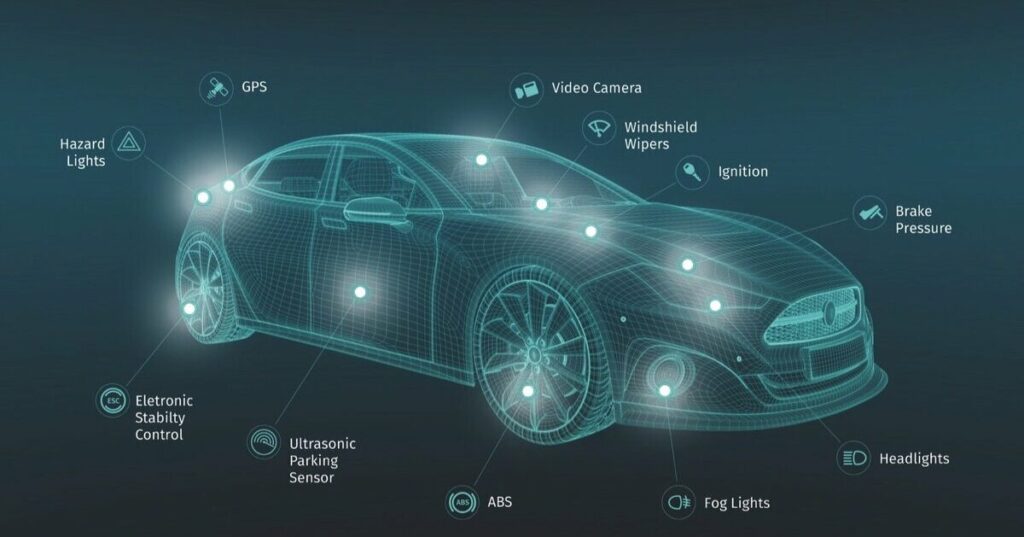
The highest priority during startup is safety. Systems like airbags, braking, stability control, and essential sensors must initialize immediately.
Non-essential features such as infotainment, seat controls, or advanced displays are intentionally delayed until critical systems are fully operational. This ensures that the vehicle is safe to drive even if other systems are still loading.
Power Management and Load Balancing
Modern vehicles carefully manage electrical load, especially during startup. Activating every system at once would create a sudden demand on the battery and electrical system.
To avoid this, the vehicle staggers feature activation. Systems like heated seats, climate control, and infotainment may activate in sequence rather than simultaneously. This helps maintain system stability and prevents voltage drops.
Network Synchronization Between Modules
Today’s vehicles rely on communication networks such as CAN bus and Ethernet. Each module must synchronize with others before certain features can function.
For example, an infotainment system may need to communicate with the body control module, amplifier, and display before becoming fully operational. If these systems are not yet synchronized, features may remain temporarily unavailable.
This brief delay ensures proper communication and prevents errors.
Software Initialization and Background Processes
Modern infotainment systems operate like computers. When the vehicle starts, software processes begin running in the background.
This includes:
- Loading user profiles
- Initializing navigation systems
- Connecting to Bluetooth devices
- Establishing network services
- Checking for updates
These processes take time, especially in more advanced systems with large displays and multiple features.
Feature Restrictions Based on Conditions
Some features are intentionally delayed or restricted based on conditions such as vehicle speed, gear position, or system readiness.
For example, certain menus may only become available after the vehicle is fully initialized, or specific controls may remain inactive until the system confirms all modules are functioning correctly.
This prevents incomplete or incorrect operation.
Why Delays Are Becoming More Noticeable
As vehicles become more advanced, the number of systems that need to initialize has increased significantly. Larger screens, more modules, and more software all contribute to longer startup sequences.
Even though delays are usually only a few seconds, they are more noticeable because drivers expect instant response similar to smartphones and tablets.
Final Thoughts
Delayed feature activation in modern vehicles is not a defect — it’s part of a carefully designed system that prioritizes safety, stability, and proper communication between modules.
As vehicles continue to evolve into software-driven platforms, these startup sequences will remain an important part of how systems operate. The goal is not just speed, but reliability and correct functionality across all vehicle systems.
Understanding this helps set the right expectations and highlights how advanced today’s vehicle electronics have become.