
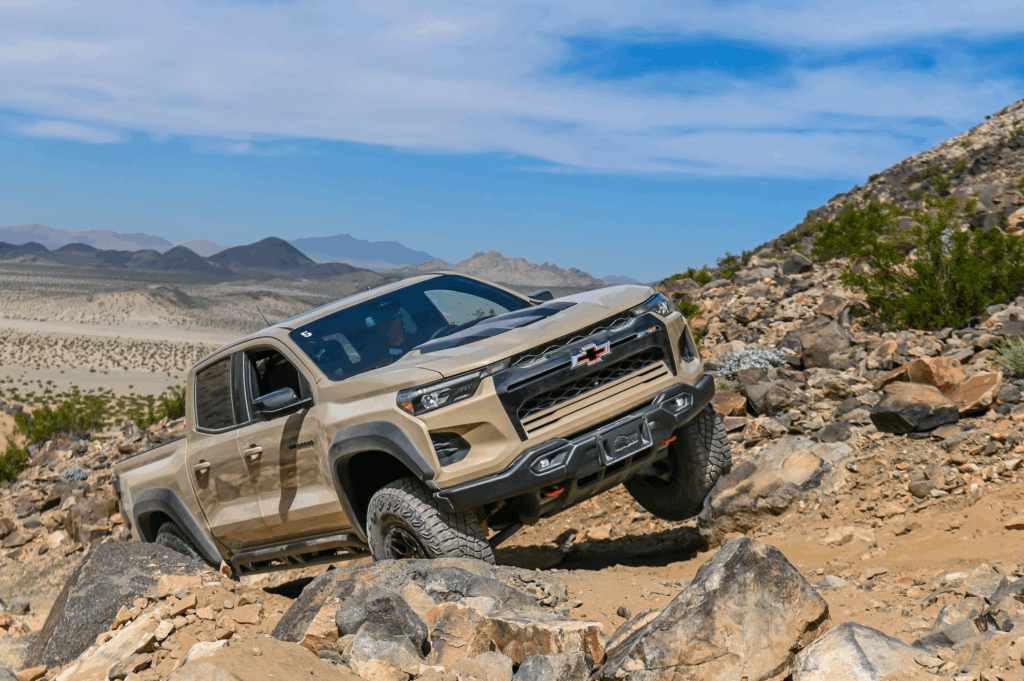
Modern trucks and SUVs are more capable off-road than ever before. While ground clearance and tires still play a major role, much of today’s off-road performance comes from advanced electronic systems working behind the scenes.
These systems are designed to maximize traction, maintain stability, and give drivers better control in challenging environments like mud, snow, sand, and rocky terrain.
The Challenge of Off-Road Driving
Off-road conditions are unpredictable. Surfaces can be loose, uneven, or constantly changing. Unlike paved roads, traction is not consistent, and wheels can easily lose grip.
In these situations, maintaining control depends on how effectively a vehicle can manage power delivery and wheel movement. This is where modern off-road systems make a significant difference.
Traction Control Systems Beyond the Basics
Standard traction control systems are designed for on-road use, reducing wheel spin during acceleration. Off-road systems take this concept further by allowing a controlled amount of wheel slip when needed.
In loose surfaces like sand or mud, some wheel spin is necessary to maintain momentum. Advanced systems adjust automatically, balancing traction and power without completely cutting output.
This allows the vehicle to keep moving instead of getting stuck.
Electronic Locking Differentials
One of the most important off-road features is the locking differential. In normal driving, differentials allow wheels to rotate at different speeds. However, off-road, this can cause power to be sent to the wheel with the least traction.
Locking differentials solve this by forcing both wheels on an axle to rotate at the same speed. This ensures that power is delivered evenly, improving traction when one wheel loses grip.
Electronic versions allow drivers to engage or disengage this feature as needed.
Terrain Management Systems
Many modern vehicles include selectable terrain modes that adjust multiple systems at once. These modes are tailored for specific conditions such as snow, sand, mud, or rocks.
When activated, the system can modify:
- Throttle response
- Transmission behavior
- Traction control sensitivity
- Torque distribution
This simplifies off-road driving by optimizing the vehicle’s behavior for the environment without requiring manual adjustments.
Hill Descent and Hill Start Assist
Steep terrain presents unique challenges. Hill descent control helps maintain a steady, controlled speed when driving downhill by automatically applying brakes as needed.
Hill start assist prevents the vehicle from rolling backward when starting on an incline. These features improve driver confidence and reduce the need for precise pedal control in difficult situations.
Advanced All-Wheel Drive Systems
Modern all-wheel drive (AWD) and four-wheel drive (4WD) systems are far more advanced than traditional setups. Instead of fixed power distribution, they can dynamically adjust torque between the front and rear axles.
Some systems can even distribute power side-to-side, improving traction during cornering or when one wheel loses grip. This real-time adjustment helps maintain stability across a wide range of conditions.
Suspension and Wheel Control
Off-road systems also work with the suspension to improve traction. Features like electronic sway bar disconnects and adaptive suspension systems allow wheels to maintain better contact with uneven terrain.
Keeping all four wheels in contact with the ground is critical for maintaining traction and control.
The Role of Driver Confidence
One of the biggest benefits of modern off-road systems is how they improve driver confidence. By managing complex variables automatically, these systems allow drivers to focus more on navigation and less on controlling every detail of vehicle behavior.
This makes off-roading more accessible, even for those with limited experience.
Final Thoughts
Off-road capability is no longer defined by mechanical components alone. Advanced electronic systems now play a major role in how vehicles handle challenging terrain.
By improving traction, optimizing power delivery, and enhancing control, these systems allow modern trucks and SUVs to perform at a much higher level than ever before. Whether navigating rough trails or extreme conditions, off-road technology continues to push the limits of what vehicles can achieve.