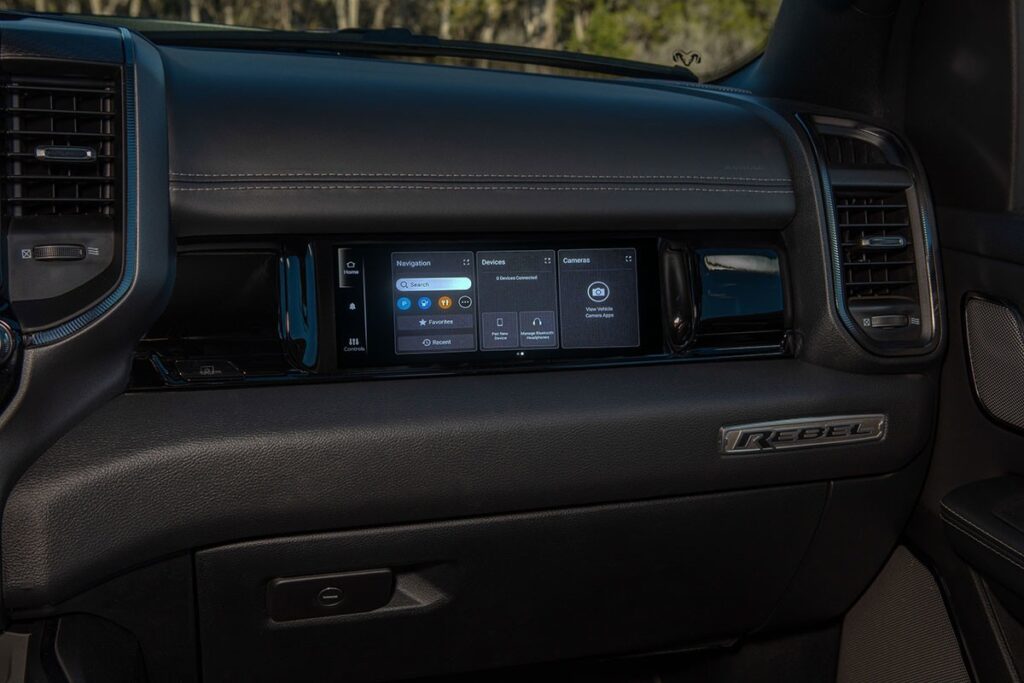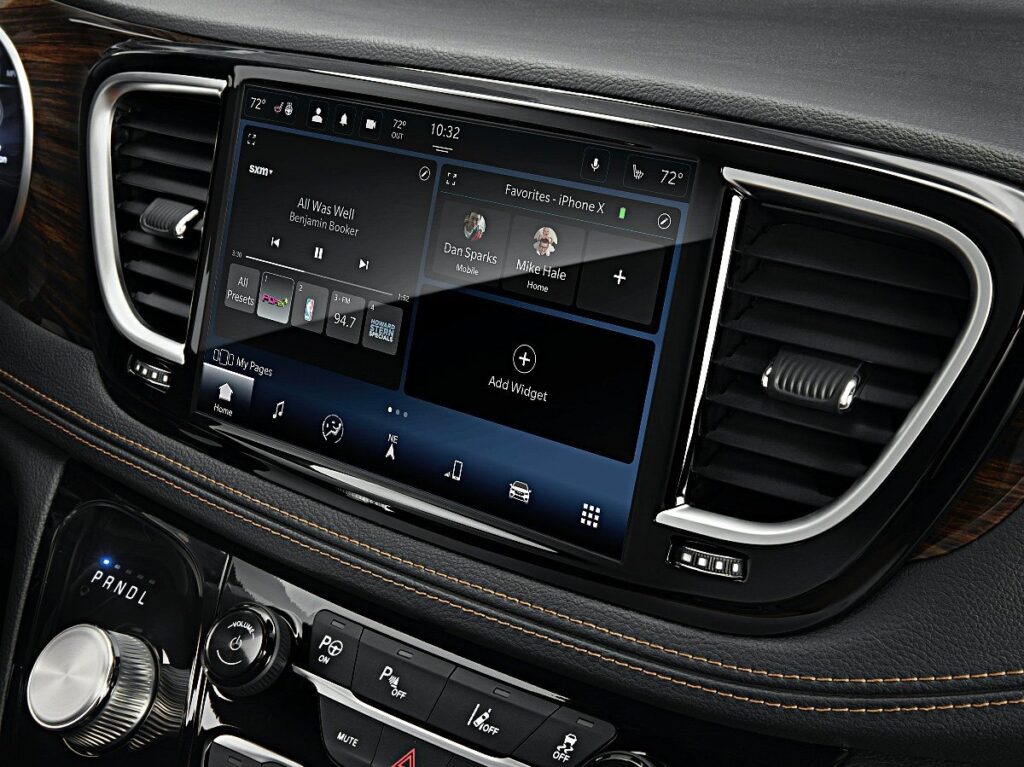
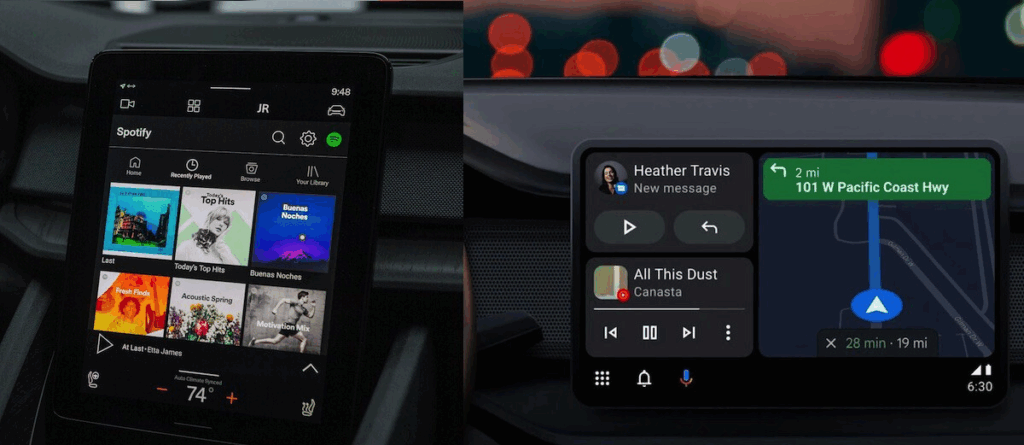
As more vehicles adopt Google-powered infotainment systems, many drivers are running into two similar-sounding names: Android Auto and Android Automotive. While they share branding and some visual similarities, they are fundamentally different technologies — and the distinction matters more than ever in 2025.
Understanding the difference can help drivers know what features they’ll get, what data the vehicle can access, and how much control the automaker retains over the infotainment experience.
What Is Android Auto?
Android Auto is a phone-projection system. It runs entirely on your smartphone and mirrors select apps onto the vehicle’s infotainment screen.
Key characteristics:
Requires a compatible Android phone
Uses your phone’s data connection
Apps are limited to approved categories (navigation, media, messaging)
Stops working if your phone disconnects
Android Auto does not control vehicle systems directly. It acts as a bridge between your phone and the screen.
Common features include:
Google Maps or Waze
Spotify, YouTube Music, Audible
Voice control via Google Assistant
Messaging and call handling
What Is Android Automotive?
Android Automotive OS (AAOS) is a full operating system built directly into the vehicle. It runs independently of your phone and controls core infotainment functions.
Key characteristics:
Built into the vehicle hardware
Does not require a phone to function
Can access vehicle data (battery, range, climate, sensors)
Supports native apps via Google Play
Android Automotive can control:
Navigation and EV routing
Climate and seat settings
Media playback
Driver assistance visuals
Over-the-air updates
This system is increasingly used by OEMs like GM, Volvo, Polestar, and others.
Key Differences at a Glance
| Feature | Android Auto | Android Automotive |
|---|---|---|
| Runs on | Your phone | The vehicle |
| Phone required | Yes | No |
| App availability | Limited | Expanding (Google Play) |
| Vehicle system access | No | Yes |
| OTA updates | Via phone | Direct from OEM |
| Data control | User-centric | OEM-controlled |
Why Automakers Are Moving to Android Automotive
Automakers are shifting toward Android Automotive for several reasons:
1. Deeper Vehicle Integration
Android Automotive can display EV range, charging status, ADAS visuals, and system alerts — something Android Auto cannot do.
2. Software-Defined Vehicles
As vehicles become software-driven platforms, OEMs want infotainment systems that can be updated, expanded, and controlled centrally.
3. Data Ownership
Android Automotive allows automakers to retain control over vehicle data, analytics, and user behavior rather than routing everything through a phone.
4. Subscription & Feature Monetization
Built-in systems make it easier for OEMs to offer paid features, navigation services, or premium apps.
What This Means for Drivers
Pros of Android Automotive
Works even without a phone
Better EV integration and navigation
Cleaner, OEM-tailored experience
Faster access to vehicle settings
Cons of Android Automotive
Less flexibility than phone projection
Depends heavily on OEM software quality
Some apps may be missing
Tighter control over customization
Pros of Android Auto
Familiar phone-based experience
Easy app switching
User controls data and apps
Works across many vehicles
Cons of Android Auto
Requires phone connection
Limited access to vehicle systems
Can feel disconnected from EV features
Can They Coexist?
Yes — some vehicles support both. Drivers can use Android Automotive for built-in navigation and vehicle control, while still enabling Android Auto for phone-based apps.
However, some manufacturers are removing Android Auto entirely in favor of Android Automotive, forcing drivers to rely on native apps only.
The Bottom Line
Android Auto and Android Automotive serve very different purposes:
Android Auto is ideal for drivers who want a phone-centric, flexible experience.
Android Automotive is designed for software-defined vehicles where infotainment is deeply tied into the car itself.
As automakers push for greater control over software and services, Android Automotive is becoming more common — but for many drivers, the loss of phone projection remains controversial.
Infotainment in 2025 is no longer just about screens — it’s about who controls the software behind them.