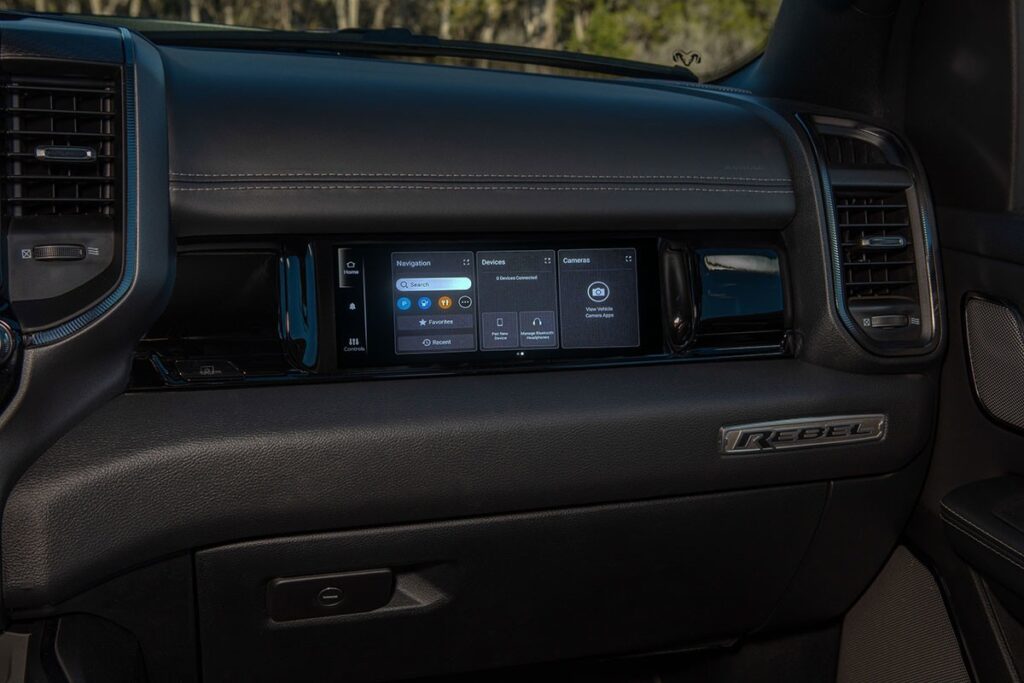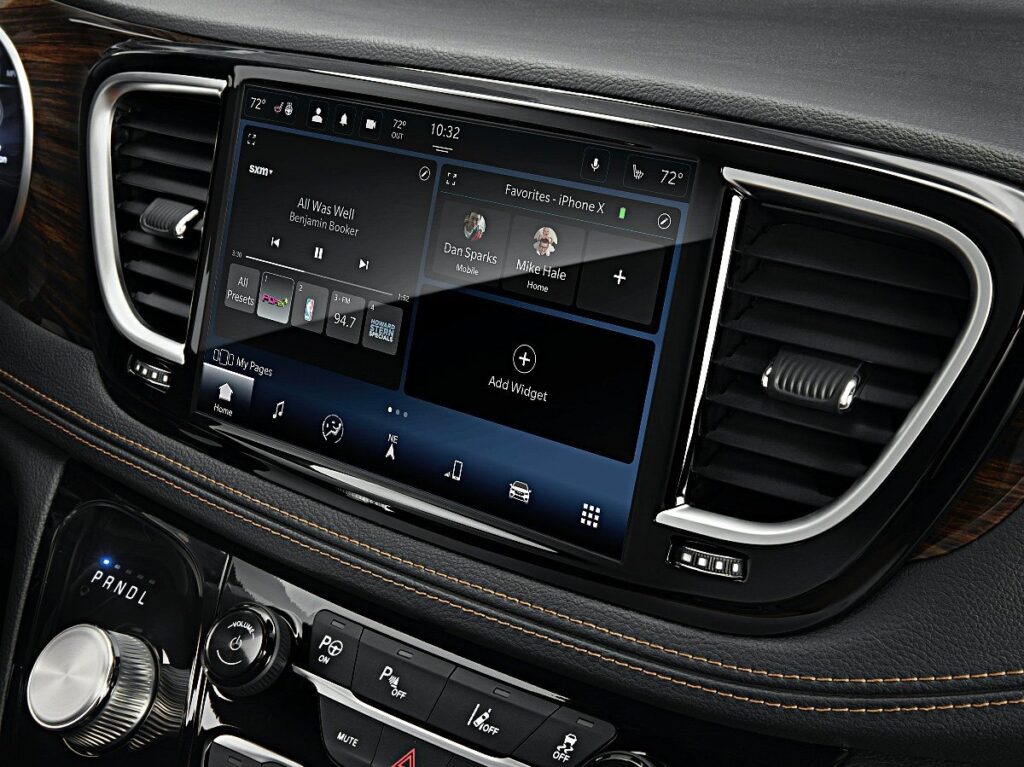
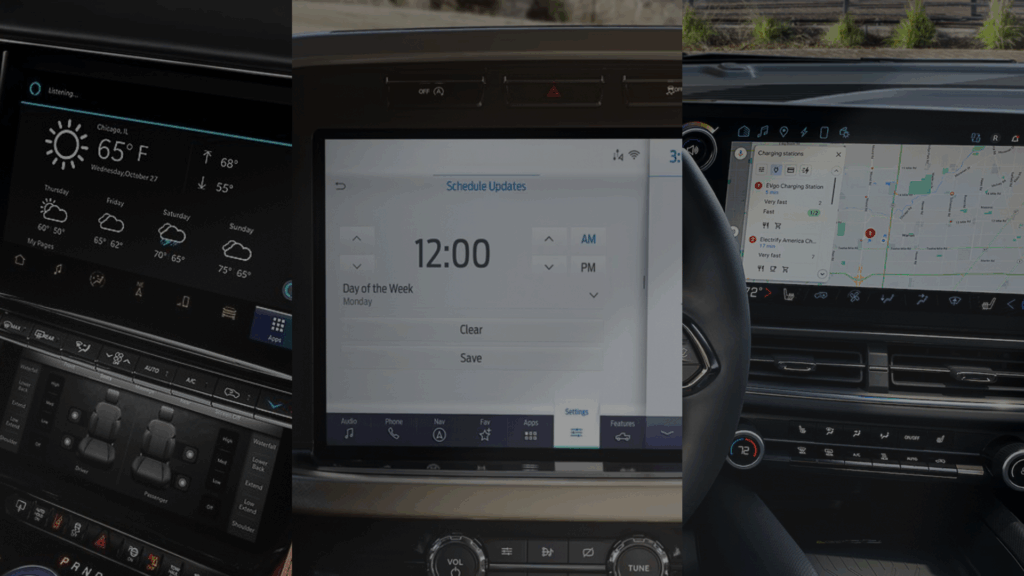
Infotainment systems have become one of the most important decision-making factors for new vehicle buyers. In 2025, three platforms dominate the North American market: Uconnect 5, SYNC 4, and Google Built-In.
Each system takes a different approach to connectivity, software updates, and driver experience. Here’s how they compare in real-world use.
User Interface & Responsiveness
Uconnect 5
Uconnect 5 is widely regarded as one of the fastest OEM infotainment systems available. It uses modern processors, smooth animations, and a clean layout that prioritizes ease of use. Menu transitions are quick, and the system rarely feels laggy—even on large screens.
SYNC 4
SYNC 4 improved significantly over earlier Ford systems. It’s responsive, visually clean, and supports split-screen layouts well. While it’s generally smooth, performance can vary slightly depending on screen size and vehicle model.
GM Google Built-In
Google Built-In offers a familiar Android-style interface, but responsiveness depends heavily on vehicle hardware. Some models feel fluid, while others show occasional lag. The system is powerful but more complex than Uconnect or SYNC.
Winner: Uconnect 5
Apple CarPlay & Android Auto Support
Uconnect 5
Supports wireless Apple CarPlay and Android Auto across most models. Integration is stable and easy to use.
SYNC 4
Also supports wireless CarPlay and Android Auto, with strong compatibility and good reliability.
GM Google Built-In
This is where GM stands apart. Many newer GM vehicles do not support CarPlay or Android Auto at all, relying instead on native Google apps.
Winner: Uconnect 5 & SYNC 4 (tie)
Navigation & Built-In Apps
Uconnect 5
Offers built-in navigation on select trims, but most users rely on phone projection. App ecosystem is limited compared to Google.
SYNC 4
Cloud-connected navigation with real-time traffic and EV routing support. Still app-light, but effective.
GM Google Built-In
Strongest native app ecosystem. Google Maps, YouTube Music, Spotify, Waze alternatives, and Google Assistant are all built in without needing a phone.
Winner: GM Google Built-In
Voice Assistant & AI Features
Uconnect 5
Uses Alexa integration on many models. Good for vehicle controls and basic smart-home interaction, but not deeply conversational.
SYNC 4
Ford’s voice assistant is reliable for navigation, climate, and calls, but still feels command-based rather than conversational.
GM Google Built-In
Google Assistant is the most natural and accurate. Handles conversational queries, follow-ups, and context better than competitors.
Winner: GM Google Built-In
Over-the-Air (OTA) Updates
Uconnect 5
Supports OTA updates for infotainment and select modules. Updates are generally stable and improve UI over time.
SYNC 4
Strong OTA support. Ford actively updates SYNC features, EV tools, and system stability.
GM Google Built-In
Built around OTA updates. GM can push software, UI changes, and new apps remotely—but this also gives GM tighter control over features.
Winner: GM Google Built-In
Customization & Driver Profiles
Uconnect 5
Supports user profiles for seat memory, climate, and infotainment preferences. Simple and effective.
SYNC 4
Driver profiles integrate well with cluster layouts and vehicle settings.
GM Google Built-In
Highly customizable but sometimes fragmented between vehicle settings and Google account preferences.
Winner: SYNC 4
Which One Is Best in 2025?
Best Overall Experience:
Uconnect 5 — Fast, simple, reliable, and still supports phone projection.
Best for Smartphone-Free Driving:
GM Google Built-In — Powerful native apps and voice control, but limited flexibility.
Best Balanced System:
SYNC 4 — Strong all-around performance with fewer restrictions.
Final Verdict
There’s no universal winner—it depends on what you value most:
Want speed and simplicity? Choose Uconnect 5.
Want Google apps without your phone? GM Google Built-In delivers.
Want flexibility and wireless phone integration? SYNC 4 is the safest choice.
As automakers push deeper into software-defined vehicles, infotainment systems are no longer just radios—they’re the control center of the entire driving experience.